What goes wrong, and what it actually means
| Failure | Symptom you'll notice | Fix |
|---|---|---|
| Scooping too rarely | Ammonia hit when you walk past; cat perching on the rim | Twice-daily scooping for a week and see if the behavior resolves |
| Litter too shallow | Clumps stuck to the pan floor; scooping feels like chiseling | Top up to 2–3 inches after every scoop session |
| Scented cleaners | Cat starts going next to the box, not in it | Unscented dish soap and hot water only; rinse thoroughly |
| Scratched plastic pan | Odor persists immediately after washing | Replace the pan, or switch to a non-porous surface |
| Box too small | Litter kicked everywhere; cat hangs over the edge | A box roughly 1.5× your cat's body length, as Arm & Hammer recommends |
| Wet pan refilled | Bottom layer sets like concrete within a day | Dry fully, including corners, before adding litter |
| Liners used with a digger | Torn liner, urine pooled underneath | Skip liners, or use a rimmed box designed to secure them |
Quick answer: Scoop every clump and stool at least once a day, top the litter back up to a steady depth, and do a full dump-and-wash on a schedule — roughly weekly for non-clumping litter, every two to four weeks for clumping. Wash with unscented dish soap and hot water only, dry the pan completely before refilling, and skip bleach, ammonia and anything citrus-scented. Most "my cat stopped using the box" problems are cleaning-frequency problems wearing a costume.
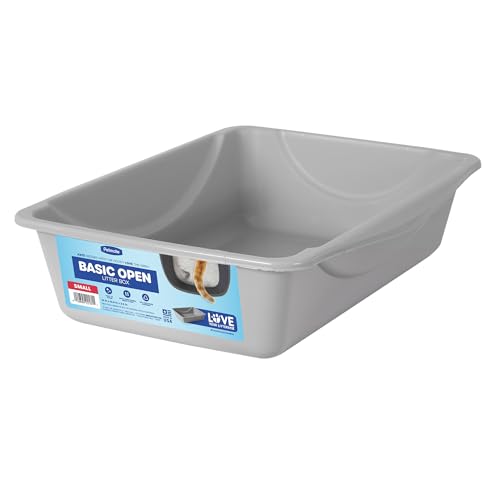
- OPEN-TOP KITTY LITTER BOX: This small cat litter pan provides ample space on all sides for cats to do their business comfortably, and is great for small cats or kittens to access
- KEEPS LITTER CONTAINED: This small cat litter box features a wide base to keep mess contained within the pan for litter-free floors It features a rim on all sides to easily lift
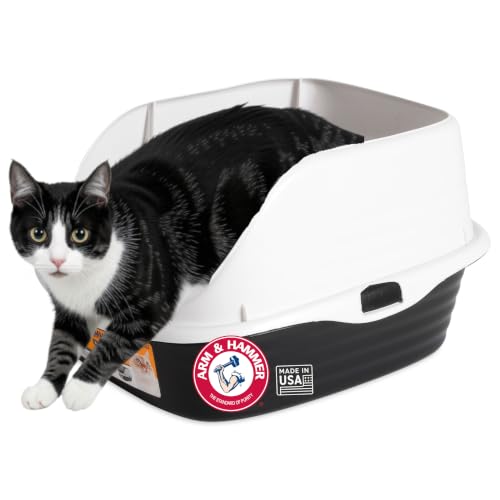
- LESS MESS, CLEANER AREA: The high sided litter box design helps secure liners and reduces spills, keeping the area around your litter box cleaner and more organized
- ODOR PROTECTION: This cat litter box features built-in smell protection to combat odors; replace cat litter boxes every 12 months to keep freshness
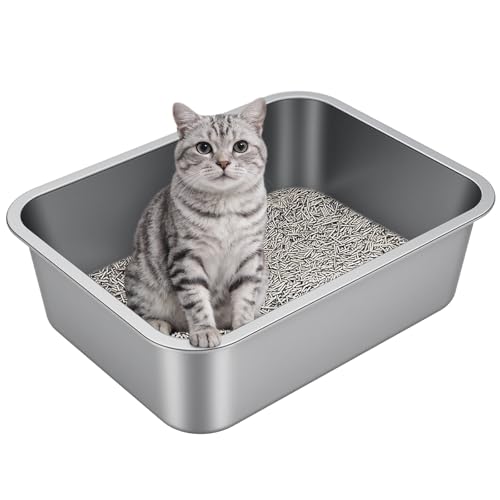
- Large Capacity: The Idymere stainless steel litter box measures 16.93"L x 12.99"W x 5.12"H, offering ample space for kitty, kittens, elderly cats or medium cats to do their
- Strong and Sturdy: Made of high-quality stainless steel, this litter box resists corrosion, wear, and rust. Unlike plastic litter boxes, it does not trap residue or odors, helping
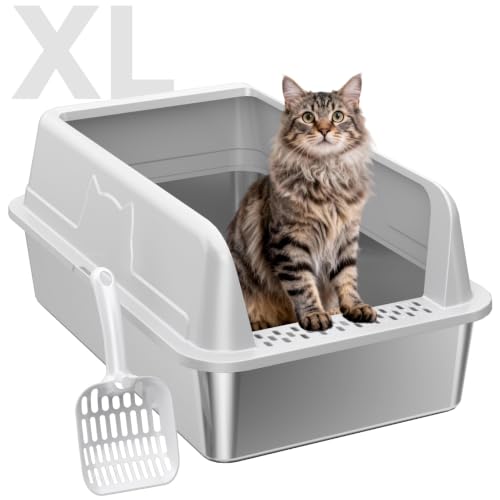
- Space:This spacious stainless steel litter box measures 22.95" L x 14.80" W x 10.04" H, offering ample room for cats or multi-cat homes. Ideal for cats for turning, digging, and
- High-Sided Design:The 10.04" tall walls help prevent litter scatter and urine spills, keeping floors clean. A built-in anti-tracking step reduces mess, while the high sides create
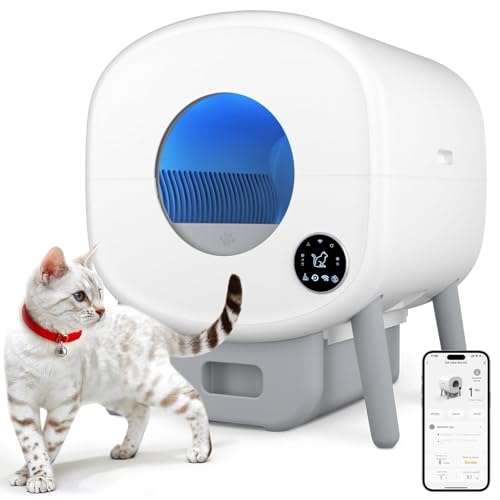
- Cat Safety Priority: Cumrige automatic litter box uses advanced sensors to detect your cat's presence, pausing cleaning cycles for their safety. This ensures your feline friend
- Large Drum Capacity: The automatic cat litter box features a 95 L roller capacity for cats 2.2 to 33 lbs. Its 15 L waste bin lasts up to 15 days, making it ideal for long trips
The routine, step by step
1. Scoop daily — twice if you can. Cats are graded on a curve you don't control. A box that looks fine to you can already read as filthy to a cat that's standing in it. Aim for once every morning and once at night in a single-cat home; multi-cat homes realistically need it after each heavy use. Gotcha: scooping only the poop and leaving urine clumps is the single most common half-job. Urine is what smells, and buried clumps are what fuse to the pan floor.
2. Get under the clumps, not just at them. Slide the scoop along the bottom of the pan and lift, rather than digging down from above. Clumps that have set against the plastic will break apart if you attack them from the top, and the fragments dissolve into the clean litter where you'll never find them. Gotcha: a scoop with slots that are too wide turns half your clumps into crumbs. If your scoop is shedding clump every time, that's the tool, not your technique.
The best how to clean a litter box for your situation depends on how you plan to use it and where.
3. Top up to a consistent depth. Two to three inches for clumping litter, less for pellets or crystals. Every scoop removes litter, so a box you never refill quietly gets shallower until clumps hit the floor of the pan and stick. Gotcha: going deeper than about four inches doesn't help — cats dig to the bottom anyway, and you're just paying for litter you'll throw out.
4. Wipe the walls weekly. High-peeing cats hit the sidewalls, and that dried film is a real chunk of the smell in the room. A damp cloth with a drop of dish soap, once a week, takes thirty seconds. Gotcha: on a plastic pan, don't scrub with anything abrasive. Every scratch you put in the surface is a place urine soaks in permanently.
5. Full dump and wash on schedule. Empty everything. Hot water, unscented dish soap, soft brush, rinse hard. For stubborn film, a paste of baking soda and water left for ten minutes works without scratching. Rinse until you can't smell soap. Gotcha: never use bleach if any ammonia-based cleaner has touched that pan, and don't use ammonia at all — it smells like urine to a cat and reads as an invitation.
6. Dry it completely before refilling. A damp pan turns the first inch of fresh litter into cement. Towel it, then let it air out for fifteen minutes. Gotcha: drying it in direct sun is fine for stainless steel, but it can warp thin plastic over time.
7. Retire the pan when it's done. Plastic pans absorb odor once the surface is scratched up. Arm & Hammer's own guidance on their boxes is to replace them every 12 months. If the box smells right after a wash, the box is the problem.
Specs at a glance
| Product | Price | Material / type | Dimensions | Litter compatibility |
|---|---|---|---|---|
| Petmate Basic Open Cat Litter Pan | Check price on Amazon | Plastic, open top, made in USA | 14" x 10.5" x 3.5" | Not stated |
| Arm & Hammer Large Sifting Litter Box | Check price on Amazon | Recycled plastic, sifting tray, Microban | Not stated | Pine, crystal, pellets, clumping |
| Idymere Stainless Steel High Sided Box | Check price on Amazon | Stainless steel, open, high sides | 16.93"L x 12.99"W x 5.12"H | Not stated |
| OneBug Stainless Steel XL Litter Box | Check price on Amazon | Stainless steel, high sides, scoop included | 22.95"L x 14.80"W x 10.04"H | Not stated |
| Cumrige Self Cleaning Litter Box | Check price on Amazon | Automatic, app-controlled | Not stated (95 L drum, 15 L waste bin) | Clumping |
| Arm & Hammer Rimmed Cat Litter Box | Check price on Amazon | Recycled plastic, high sides, Microban | 18.7" x 15.5" x 10.6" | Pine, crystal, clumping |
When the fix is a new box
Sometimes the cleaning routine is fine and the equipment is fighting you. These are worth reading the listings and current reviews on yourself before deciding.
Petmate Basic Open Cat Litter Pan, Multidirectional Easy to Clean Plastic Litter Box, Gray, Made in USA, 14" x 10.5" x 3.5", Small Recommended for Kittens and Small Cats — a cheap pan you can replace on schedule
At $4.99, replacing a plastic pan annually stops being a decision. The Petmate Basic Open Cat Litter Pan, Multidirectional Easy to Clean Plastic Litter Box, Gray, Made in USA, 14" x 10.5" x 3.5", Small Recommended for Kittens and Small Cats has a rim on all sides for lifting and a wide base, and Petmate positions it for kittens and small cats — check the 14" x 10.5" footprint against your cat before ordering.
Arm & Hammer Large Sifting Litter Box Scoop Free Cat Litter Tray with Microban, Made in USA — removes the scoop from the routine
The Arm & Hammer Large Sifting Litter Box Scoop Free Cat Litter Tray with Microban, Made in USA uses a lift-to-sift tray, so daily maintenance is a lift rather than a dig. It takes pine, crystal, pellets or clumping litter, and has Microban built into the plastic to inhibit odors.
Idymere Stainless Steel High Sided Cat Litter Box — a surface that can't absorb odor
Stainless steel is non-porous, so there's nothing for urine to soak into and no scratches to trap it. The Idymere Stainless Steel High Sided Cat Litter Box measures 16.93" x 12.99" x 5.12", has rounded edges, and dries fast — which matters if you're washing weekly.
OneBug Stainless Steel XL Cat Litter Box, High Sides, Non Stick Pan with Scoop — for high-pee-ers and enthusiastic diggers
At 22.95" x 14.80" x 10.04", the OneBug Stainless Steel XL Cat Litter Box, High Sides, Non Stick Pan with Scoop has 10-inch walls and an anti-tracking step, with clips locking the walls to the base. A matching scoop is included, and the non-stick steel is meant to let litter slide off during cleanout.
Cumrige Self Cleaning Litter Box, Large Capacity Automatic Cat Litter Box Self Cleaning for Cats, App Control,Safety Protection, 2 Roll Garbage Bags,White & Grey — when nobody's home to scoop
The Cumrige Self Cleaning Litter Box, Large Capacity Automatic Cat Litter Box Self Cleaning for Cats, App Control,Safety Protection, 2 Roll Garbage Bags,White & Grey has a 95 L drum, a 15 L waste bin rated to last up to 15 days, and sensors that pause the cycle when a cat is detected. It's for cats 2.2 to 33 lbs, uses clumping litter, and runs on 2.4 GHz WiFi through the Tuya app.
Arm & Hammer Rimmed Cat Litter Box with High Sides and Microban, Made in USA — if liners keep failing you
The rim on the Arm & Hammer Rimmed Cat Litter Box with High Sides and Microban, Made in USA is designed to secure liners rather than let a digging cat pull them loose. It's 18.7" x 15.5" x 10.6", made from recycled materials, and carries Microban odor protection.
FAQ
How often do I really need a full dump-and-wash? Weekly for non-clumping litter, every two to four weeks for clumping if you're scooping diligently. If you can smell the box after washing, the pan itself has absorbed odor and needs replacing.
Can I use bleach? Heavily diluted bleach and a very thorough rinse is common practice, but it's easy to get wrong and residue can put a cat off the box. Unscented dish soap and hot water handles almost everything. Never combine bleach with ammonia-based cleaners.
Does a covered or automatic box mean less cleaning? Less scooping, not less cleaning. An automatic box like the Cumrige still needs its waste bin emptied and the drum washed periodically, and any enclosed design concentrates odor if you skip that.
How many boxes should I have? The standard guidance is one per cat plus one. More boxes means each one stays cleaner between scoops, which usually solves avoidance problems faster than any product swap.
Related guides
- Editorial Policy: How Nuzzleen Researches and Reviews Products
- Get a Best dog and cat supplies - dog crates, cat trees, dog beds, litter boxes, pet kennels and cat condos Quote
- Best dog and cat supplies - dog crates, cat trees, dog beds, litter boxes, pet kennels and cat condos Industry Trends
Key Takeaways
- Choosing the right how to clean a litter box means matching the key features to your specific needs and budget
- Read real customer reviews and check the return policy before you commit
- Compare value across models — the priciest option is not always the best fit