As an Amazon Associate this site earns from qualifying purchases.
Specifications
| Product | Price | Stated dimensions | Fill | Cover / cleaning | Waterproof |
|---|---|---|---|---|---|
| EHEYCIGA Orthopedic Extra Large Dog Bed, Waterproof Washable XL Pet Bed 44" | Check price on Amazon | 44" (XL); medium/large/XL offered | Memory foam + egg crate foam | Machine wash cover cold, delicate; foam not washable | Film under fleece surface; sides not waterproof |
| Simple Trending Raised Dog Bed for Large Dogs, Waterproof XL Dog Cot, Outdoor Cooling Elevated Pet Bed Load 200lb, 47.75" x 30.5", Grey | Check price on Amazon | 47.75"L x 30.5"W x 8"H | None — mesh over frame | Wipe/hose mesh; mild soap for deep clean | Mesh cot, no foam to soak |
| Bedsure Orthopedic Dog Beds Large Sized Dog with Removable Washable Cover | Check price on Amazon | Not stated | High-density egg-crate foam, CertiPUR-US | Unzip, remove cover, machine wash | Laminated waterproof layer |
| Jolifield Orthopedic Large Dog Bed Pillow Pet Sofa Bed 36''X24'' Grey | Check price on Amazon | 36"x24" (L); M 30"x20", XL 42"x28", XXL 48"x30", Jumbo 56"x40" | 3.5" high-density egg crate foam | Machine wash cover, tumble dry; foam not washable | Waterproof TPU |
| KSIIA Washable Dog Bed Medium Size Dog Crate Bed Plush Pet Mat 35"x23" Gray | Check price on Amazon | 35"L x 23"W x 3.5"H | 3.5" polypropylene fiber, 6 keyhole fixation | Whole bed machine or hand washable | Not stated |
| EHEYCIGA Orthopedic Dog Bed Medium Size Dog, Waterproof Washable Pet Beds | Check price on Amazon | Not stated (medium; other sizes offered) | Memory foam + egg crate foam | Zip-off cover, machine washable; foam not washable | Film under fleece; faux linen sides not waterproof |
Quick answer: Measure your dog nose-to-tail while they're stretched out, add 6–12 inches, and buy that size or larger — undersized beds are the single most common mistake. After size, the decisions that actually matter are fill type (egg crate/memory foam for seniors and heavy dogs, fiber fill for young dogs), whether the cover is removable and washable, and whether there's a waterproof layer.
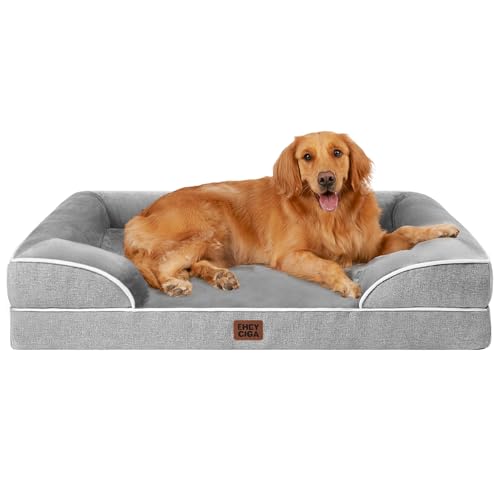
- Polyurethane Foam: The EHEYCIGA orthopedic dog bed features memory foam and egg crate foam to provide even support and pressure relief. It offers a good balance of softness and
- SOFA BED DESIGN: This bolster dog bed is designed with 3-sided bolsters to offer additional support for your pet’s neck and head, promoting restful sleep. The surrounding sides
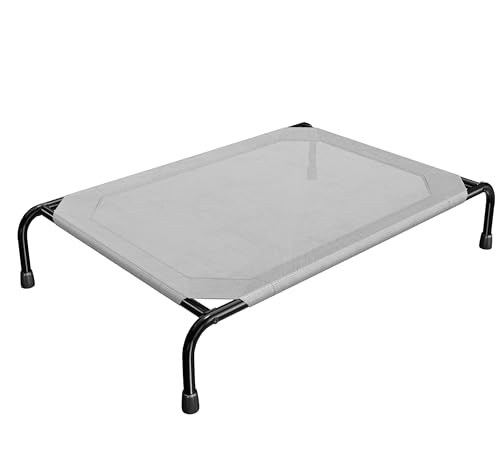
- 【Product Dimensions】47.75"L x 30.5"W x 8"Th. Raised dog bed designed for medium and large dog breeds, like a Poodle, Husky, German Shepherds, Golden Retrievers, Akitas and more
- 【Strong & Durable】Constructed with upgraded 1-inch diameter tubing, this dog cot bed supports up to 200 pounds. To ensure sturdiness and longevity, assembly requires physical
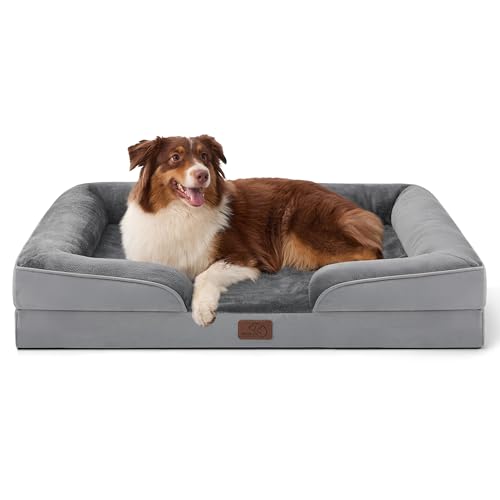
- Orthopedic Support: Our orthopedic dog sofa is designed to give your pet unparalleled support for a deep, dreamy sleep. High-density egg-crate foam helps distribute weight evenly
- Enhanced Comfort: The 4-sided bolster design promotes ultimate comfort and security, offering your pet a variety of cozy positions to snuggle. The cushioned bolster shape is
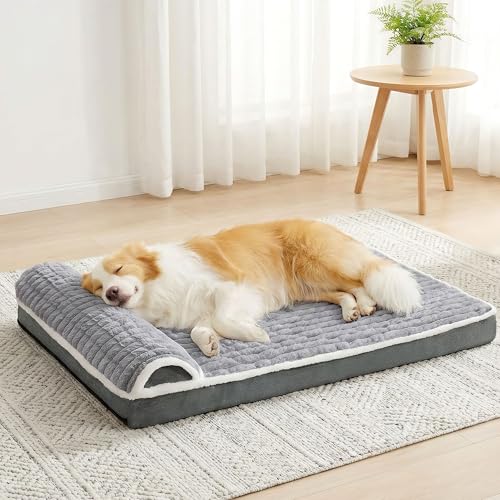
- Cozy Sleep Surface: Featuring soft Striped-Checkered flannel fleece fabric and waterproof TPU; provide furry friends with a great sense of secured, upgrading their bedding with
- Orthopedic Support: The dog bed is specially designed with 3.5 inches high-density egg crate foam to provide furry friends a restful sleep and great pressure relief to reduce
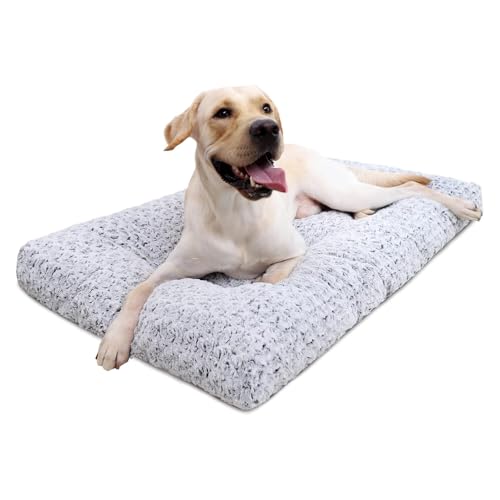
- Luxurious Padding Support - Filled with 3-1/2" premium polypropylene fiber through 6 keyhole fixation, excellent elasticity supporting and long-lasting recovery ability
- Ultra Soft Rose Velvet - Adopt heavy weight deluxe plush material make it super soft, cozy and not easy to shedding, full stuffing to ensure your little furry friend surrounded by
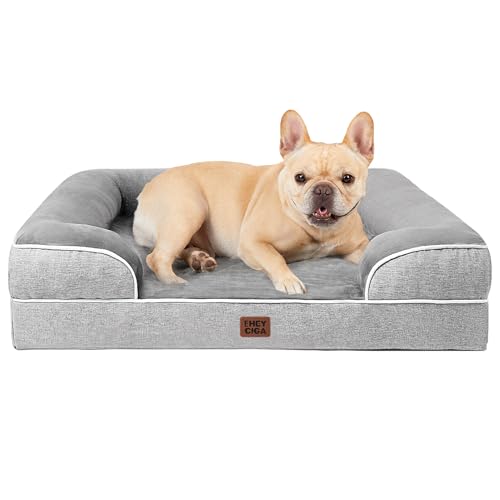
- MEMORY FOAM: The EHEYCIGA orthopedic dog bed features memory foam and egg crate foam to provide even support and pressure relief. It offers a good balance of softness and support
- SOFA BED DESIGN: This bolster dog bed is designed with 3-sided bolsters to offer additional support for your pet’s neck and head, promoting restful sleep. The surrounding sides
The four decisions, in order
1. Size. Watch how your dog sleeps. Curlers can go closer to their measured length; sprawlers who sleep flat on their side need the full length plus a good margin, and bolsters eat into usable surface area. A bolster bed's stated dimensions are the outer footprint — the sleeping area inside the bolsters is meaningfully smaller. Flat pillow beds and elevated cots give you close to the full stated area.
2. Fill. High-density egg crate foam and memory foam distribute weight and relieve pressure on joints — that's what "orthopedic" is pointing at. Polyester or polypropylene fiber fill is softer and lighter but compresses over time under a heavy dog. If your dog is over roughly 50 lbs, or is a senior, or has diagnosed joint issues, foam is the safer buy.
Finding the right how to choose the right dog bed comes down to matching the features to how you will actually use it.
3. Cleanability. A removable zip-off cover you can machine wash is non-negotiable if your dog goes outside. Note that on nearly every foam bed listed here, the foam itself is not washable — only the cover. If you need to wash the whole thing, you want a fiber-filled mat or an elevated cot you can hose off.
4. Waterproofing. A laminated or TPU film between the top fabric and the base stops accidents reaching the foam. Read the fine print: on the EHEYCIGA beds the film covers the sleeping surface, but the sides are explicitly not waterproof.
How big should the bed be?
Manufacturers publish weight guidance, and it's a reasonable starting point. Jolifield's stated ladder is the clearest published example among these: M 30"x20" for pets up to 30 lbs, L 36"x24" up to 50 lbs, XL 42"x28" up to 70 lbs, XXL 48"x30" up to 90 lbs, Jumbo 56"x40" up to 140 lbs. KSIIA rates its 35"x23" mat for dogs up to 60 lbs.
Weight is a proxy, not the measurement. A 60 lb Greyhound is longer than a 60 lb Bulldog. Measure, then check the measurement against the size chart — and when you fall between two sizes, size up. Nobody has ever regretted a bed that was slightly too big.
For a crate, do the opposite: measure the crate's interior floor and buy a mat that fits inside it without buckling at the edges.
Who a foam bolster bed is for
If your dog is a curler, leans against walls to sleep, or is a senior with stiff mornings, a bolstered foam bed is the right shape. The raised sides give them something to rest a head on, and the foam is what actually does the joint work. The Bedsure bed's four-sided bolster with a lowered entrance is specifically aimed at dogs that struggle to step up — worth noting if your dog is arthritic.
If your dog runs hot, sleeps outdoors, or you're dealing with a chewer-turned-digger, the elevated cot format is a better fit. It gets the dog off hot ground, airflow underneath keeps them cooler, and there's no foam core to destroy or soak.
Who should skip these
Skip foam bolster beds if your dog is an active chewer or destuffer — a foam core is a very expensive chew toy, and none of these are marketed as chew-resistant. Skip them also if you need to wash the entire bed regularly; on the EHEYCIGA, Bedsure and Jolifield beds the foam explicitly cannot be machine washed.
Skip the elevated cot if your dog is a burrower who wants soft sides, if you have hardwood you're worried about, or if you don't have a second adult available — Simple Trending states assembly is best done by two people.
Skip fiber-fill mats like the KSIIA if your dog is heavy or has diagnosed joint problems. Fiber compresses; foam holds its shape longer under load.
Honest trade-offs
Waterproof vs. breathable. A laminated film keeps liquid out and also traps heat. Dogs who overheat may prefer a bed without it.
Bolsters vs. usable space. Bolsters are comfortable and cost you sleeping surface. The 44" EHEYCIGA is 44" wide overall, not 44" of flat sleeping deck.
Price vs. foam density. At $19–$40, none of these are premium-tier orthopedic beds. Egg crate foam at 3.5" thickness (Jolifield) is real support for a mid-size dog; it is less convincing under a 100 lb dog. Judge by foam depth and density claims, not the word "orthopedic," which is unregulated.
Compressed shipping. Foam beds arrive vacuum-packed. EHEYCIGA states 24–48 hours to expand; Jolifield says about 72 hours; KSIIA says roughly 24. Don't judge the bed on day one.
What to check on the listing before you buy
- The exact size variant. These listings carry multiple sizes at different prices. The price shown in the table is what was listed at the time of writing for one variant — confirm the size you're selecting and its own price before checkout.
- Which dimensions are stated for your variant. Several of these listings publish full dimensions only for some sizes.
- Colour/fabric variant. Jolifield offers six colours; fabric may differ between them.
- Warranty and return terms. Not stated on any of these listings here — check the seller's own terms on the page.
- Certifications if they matter to you. Bedsure lists OEKO-TEX Standard 100 (24.HCN.46956) and CertiPUR-US foam.
- Recent reviews at your dog's size. Go read them yourself, filtered to the variant you're buying — durability complaints cluster by size.
Consider instead if…
Simple Trending Raised Dog Bed for Large Dogs, Waterproof XL Dog Cot, Outdoor Cooling Elevated Pet Bed Load 200lb, 47.75" x 30.5", Grey — consider instead if…
…your dog overheats, sleeps on a porch or patio, or you're tired of washing covers. The Simple Trending Raised Dog Bed for Large Dogs, Waterproof XL Dog Cot, Outdoor Cooling Elevated Pet Bed Load 200lb, 47.75" x 30.5", Grey is a 47.75" x 30.5" mesh cot on 1-inch tubing rated to 200 lbs, standing 8" off the ground. Clean it with a hose. Budget for two people at assembly.
KSIIA Washable Dog Bed Medium Size Dog Crate Bed Plush Pet Mat 35"x23" Gray — consider instead if…
…you're filling a crate or want a bed that goes in the washing machine whole. The KSIIA Washable Dog Bed Medium Size Dog Crate Bed Plush Pet Mat 35"x23" Gray is a flat 35" x 23" x 3.5" plush mat with polypropylene fiber fill and a non-slip, anti-scratch bottom, rated for dogs up to 60 lbs. No foam core means no "cover only" washing restriction.
Jolifield Orthopedic Large Dog Bed Pillow Pet Sofa Bed 36''X24'' Grey — consider instead if…
…you want published, unambiguous size-to-weight guidance and the lowest entry price here. The Jolifield Orthopedic Large Dog Bed Pillow Pet Sofa Bed 36''X24'' Grey uses 3.5" high-density egg crate foam under flannel fleece with a waterproof TPU layer, in five sizes from 30"x20" up to 56"x40".
EHEYCIGA Orthopedic Dog Bed Medium Size Dog, Waterproof Washable Pet Beds — consider instead if…
…you want the memory-foam-plus-egg-crate combination but your dog is medium-sized rather than XL. The EHEYCIGA Orthopedic Dog Bed Medium Size Dog, Waterproof Washable Pet Beds has the same 3-sided bolster and zip-off washable cover as its XL sibling, with faux linen sides — which are not waterproof.
FAQ
How much bigger than my dog should the bed be? Measure nose to base of tail with your dog lying stretched out, then add 6–12 inches. Cross-check against the manufacturer's weight chart and size up if you're between sizes.
Is "orthopedic" a meaningful label? Not on its own — it's unregulated. What's meaningful is the fill actually described: high-density egg crate foam, memory foam, stated thickness. Bedsure and both EHEYCIGA beds describe egg-crate and/or memory foam; Jolifield states 3.5" of egg crate foam.
Can I wash the whole bed? Usually not. The EHEYCIGA, Bedsure and Jolifield beds have removable machine-washable covers, but their foam inserts are not washable. The KSIIA mat can be fully washed by hand or machine.
Why does my new bed look flat? Foam beds ship vacuum-compressed. EHEYCIGA states 24–48 hours to fully expand, Jolifield about 72 hours, KSIIA around 24. Give it the stated time before deciding it's wrong.
Related guides
- Get a Best dog and cat supplies - dog crates, cat trees, dog beds, litter boxes, pet kennels and cat condos Quote
- Best dog and cat supplies - dog crates, cat trees, dog beds, litter boxes, pet kennels and cat condos with Limited History
- Editorial Policy: How Nuzzleen Researches and Reviews Products
Key Takeaways
- Choosing the right how to choose the right dog bed means matching the key features to your specific needs and budget
- Read real customer reviews and check the return policy before you commit
- Compare value across models — the priciest option is not always the best fit